
How to Stop Heating Oil Theft: A Practical Guide
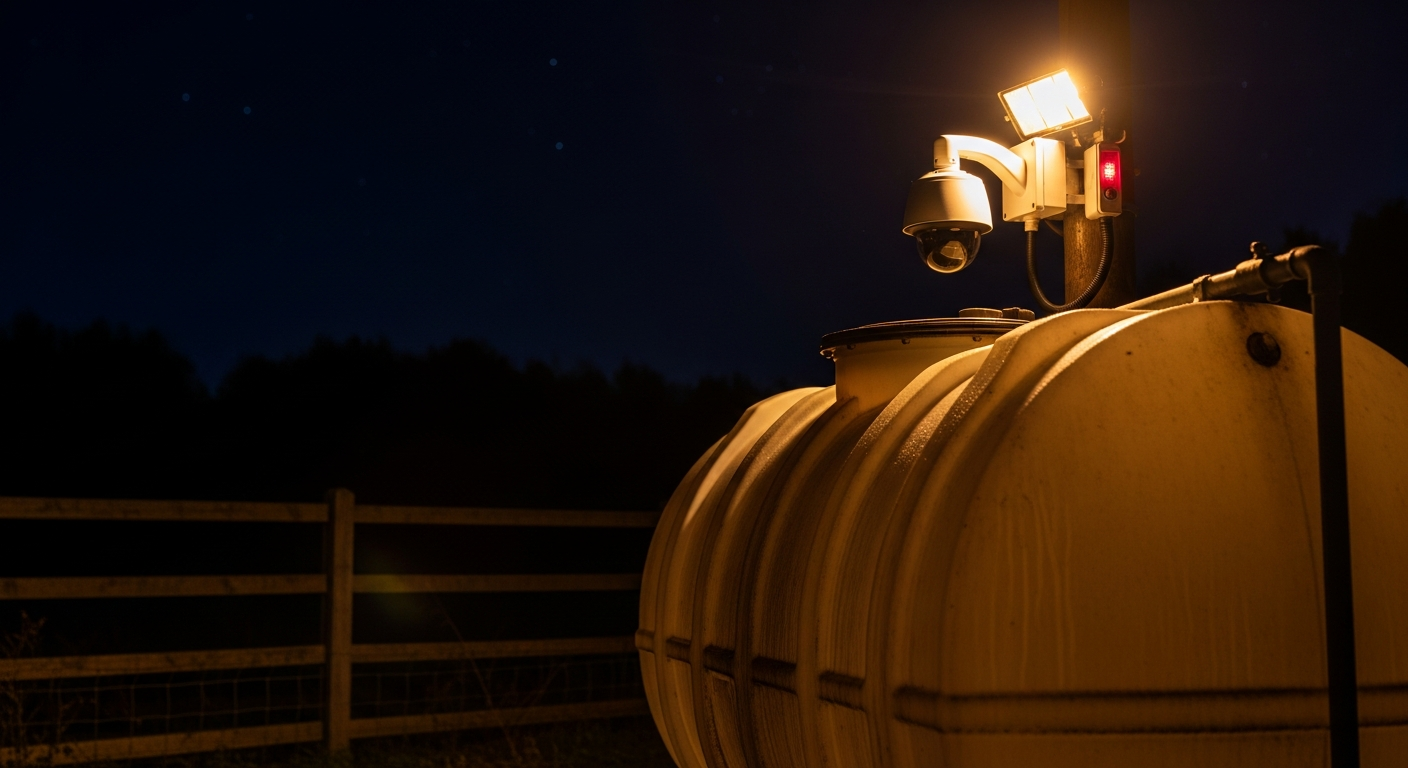
Heating oil theft is rising. Across East Anglia, rural police forces are logging more oil-related incidents every year — and most property owners only discover they’ve been targeted when they turn on the heating and nothing happens.
If you’re reading this, you’ve probably either been a victim, had a close call, or heard about a neighbour losing £400 of oil to thieves who were in and out in four minutes. This guide covers the most effective ways to reduce your risk.
Understanding how oil theft actually works
Before you can protect your tank, you need to understand what thieves are actually doing. Oil theft isn’t random — it’s organised, quick, and happens at predictable times.
Most oil theft occurs between 1am and 5am. A vehicle — usually a van or flatbed — is positioned near the tank. A pump and hose are used to draw oil from the outlet at the base of the tank. For a 1,000-litre tank, the whole job takes 5–10 minutes. The thieves are gone before most people wake up.
They target:
- Rural properties with poor lighting
- Tanks that aren’t visible from the house
- Properties with good road access (for the vehicle)
- Tanks that appear recently filled (float gauges visible from the road)
The five approaches to oil tank security
1. Physical security
Tank cages and locked enclosures raise the effort required to access a tank. They’re a good start, but not a complete solution — thieves with bolt cutters can defeat most consumer-grade cage locks in under a minute.
Tank feet locks (which prevent the outlet valve from being turned) are more effective as a standalone measure. They’re inexpensive and prevent most casual theft attempts.
Limitation: Physical barriers slow thieves down, but won’t alert you or anyone else when an attempt is made.
2. CCTV and surveillance
Cameras are useful for evidence and prosecution, but they don’t stop theft in progress. Most oil thieves are aware of camera positions and use darkness and timing to avoid useful footage.
If you use CCTV, position cameras to capture the tank outlet and vehicle approach. High-resolution cameras with night vision are essential.
Limitation: CCTV records theft, it doesn’t prevent it.
3. Oil level monitoring
Level monitors (like the Watchman Sonic) alert you when your oil level drops below a threshold. This is useful for detecting theft after the fact — but by the time you receive an alert, the thieves are likely already gone. These devices check periodically, not continuously.
Limitation: Level monitors detect the consequence of theft, not the theft itself in real time. You’ll know your oil has gone — but not in time to do anything about it.
4. Lighting and deterrence
Motion-activated lighting is a low-cost deterrent. Well-lit tanks are riskier for thieves — they’re more visible to passing traffic and neighbouring properties.
Solar-powered PIR lights are relatively inexpensive and easy to fit. They won’t stop determined thieves, but they remove the element of complete darkness that organised gangs rely on.
Limitation: Lighting deters but doesn’t detect. And many rural properties are too isolated for it to matter.
5. Dedicated oil tank alarms
A tank alarm — specifically one with a fuel level sensor that monitors continuously — is the most effective single measure. Unlike periodic level monitors, it detects the theft as it’s happening, not after a significant amount of fuel has already gone. Unlike CCTV, it actively interrupts the theft rather than recording it.
The Tank Alarm system monitors your fuel level in real time. The moment an unexpected level drop is detected — the instant a theft pump starts drawing oil — a 110dB external siren activates. Thieves who’ve just woken up an entire rural property tend to leave very quickly.
Advantage: Detects and interrupts theft in progress, not after the fact.
What combination works best?
For most rural properties, we recommend:
- A dedicated tank alarm — the highest-priority measure for active deterrence
- Tank foot locks — low cost, effective for casual theft attempts
- Motion-activated lighting — removes the cover of darkness
CCTV is a useful addition for insurance evidence, but it should come after the above, not instead of them.
Getting help
If you’re in Suffolk, Norfolk, Cambridgeshire, or North Essex, Tank Alarm Pro installs the full system professionally. We handle the sensor, siren, wiring, solar panel, and commissioning — you’re left with a working alarm and a 12-month warranty.
Want a Tank Alarm fitted?
Professional oil tank alarm installation across East Anglia. £499 fitted, 12-month warranty.
Book installation here →